
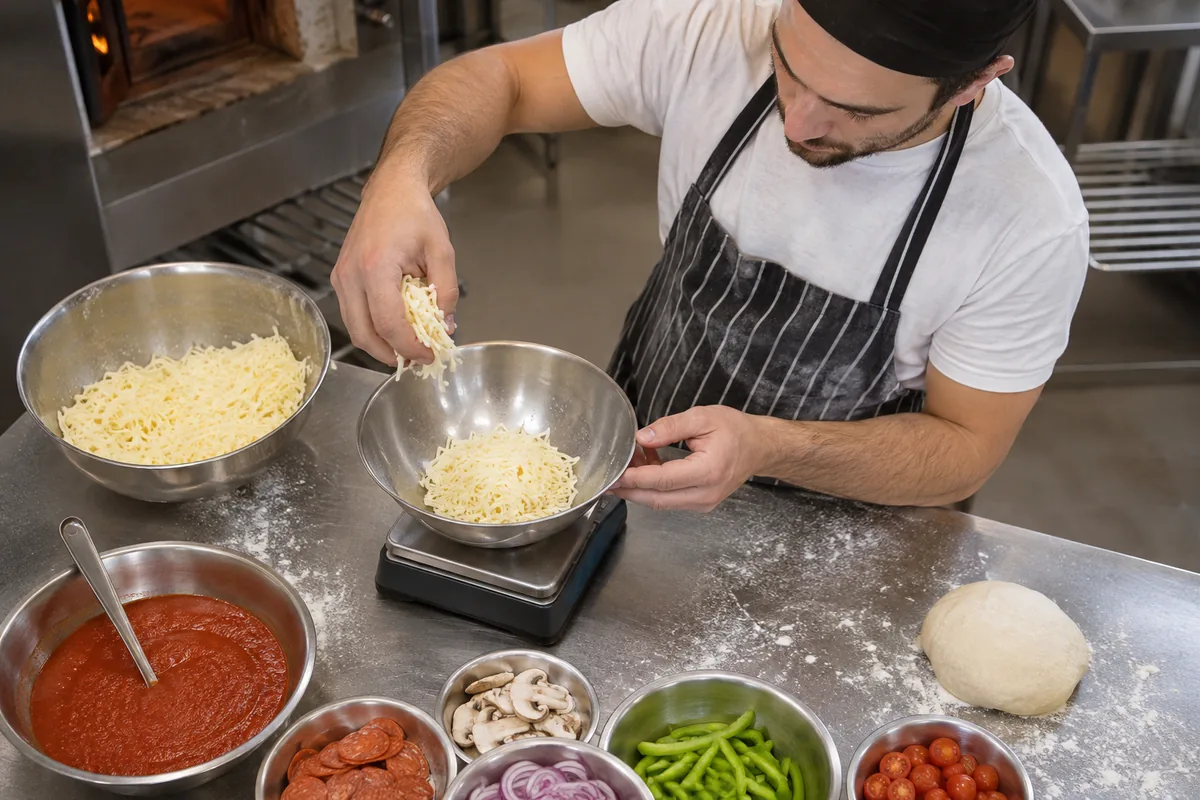
What does selling one pizza tell you about stock?
A pizza sale can contribute to ingredient tracking when the software has a configured recipe connecting that item to quantities of dough, sauce, cheese, and toppings. Recording a finished pizza alone does not establish those quantities. Before comparing systems, decide whether you need finished-item counts, recipe-based expected usage, purchasing records, or all three. Each answers a different question for the owner and the person preparing food.
Start with one regular pizza rather than your entire menu. Write its standard ingredients and units, including the portion expected for its size. Compare the written recipe with what the kitchen actually serves. The half-and-half pricing guide highlights why size and topping placement matter; those choices can also affect the ingredient quantities that an inventory process needs to represent.
Will extra toppings and substitutions change usage?
They should be evaluated explicitly rather than assumed. Demonstrate a plain pizza, an extra-cheese order, and a topping removed from one half. Ask whether each choice changes expected ingredient use and how the quantity is configured. An order note that a cook can read may not trigger any inventory adjustment. Find out which modifiers are connected to recipes and which remain instructions without a stock effect.
Check purchase and recipe units together. A supplier case, a kitchen container, and a serving portion are not interchangeable measurements. Have the team explain the conversion using an actual delivery and recipe. Use the pizza order workflow guide to keep menu language and preparation instructions aligned while testing whether inventory receives the same meaningful choices from each supported ordering channel.
Why can the count still differ from the report?
Recipe deductions describe expected consumption under the configured rules. Physical stock also reflects over-portioning, preparation losses, spoilage, staff meals, remakes, and recording mistakes. A difference does not automatically prove theft or identify a particular employee. Compare a physical count with expected use, then investigate receiving, units, recipes, and recorded adjustments before deciding what changed. Keep the process useful rather than turning every variance into an accusation.
Choose a simple way to record waste and remakes close to the event. Name the ingredient, quantity, reason, and responsible reviewer without collecting unnecessary personal information. Keep adjustments distinguishable from customer sales. The POS sales-report guide explains the importance of context: a sales total cannot, on its own, establish the amount of usable food that should remain on a shelf.
What should you demonstrate before committing?
Run a small pilot covering receipt of ingredients, several pizza builds, a remake, a recorded loss, and a physical count. Keep your expected calculations beside the system output. Ask what happens when a recipe changes and whether earlier transactions retain their original basis. A manager should be able to explain a sample period without quietly changing old records to match a new recipe.
Review whether staff can maintain the process during service. A sophisticated stock model is not useful if portions and adjustments are never recorded consistently. Document the necessary integrations, setup work, and manual steps before making a purchasing decision. Use the Freedom POS contact page to confirm current ingredient-tracking support with your own recipes, rather than assuming that every restaurant POS includes the same inventory tools.