
Which status does the customer actually need?
A customer asking where their pizza is usually needs a useful answer, not an internal software label. Separate accepted, being prepared, ready for collection, collected by a driver, and any confirmed delivery outcome your operation can establish. Do not describe an order as delivered merely because it left the kitchen. Define each status by an observable event and identify who is responsible for recording that event.
Map the same sequence for staff delivery and any supported external delivery service. The information available may differ, so be honest about what the team can confirm. The pizza order-channel guide provides a starting point for connecting order entry to production. Dispatch adds another handoff that needs its own owner, even when the order initially arrives through an integrated channel.
How do you avoid sending an incomplete order?
Before marking an order ready, compare the pizzas, sides, drinks, sauces, and number of packages with the final ticket. Assign one employee to confirm completion. A kitchen may finish the pizza while a drink or side remains elsewhere, and a driver may reasonably assume that a ready label means everything is together. Use a staging arrangement that makes incomplete and fully checked orders distinguishable.
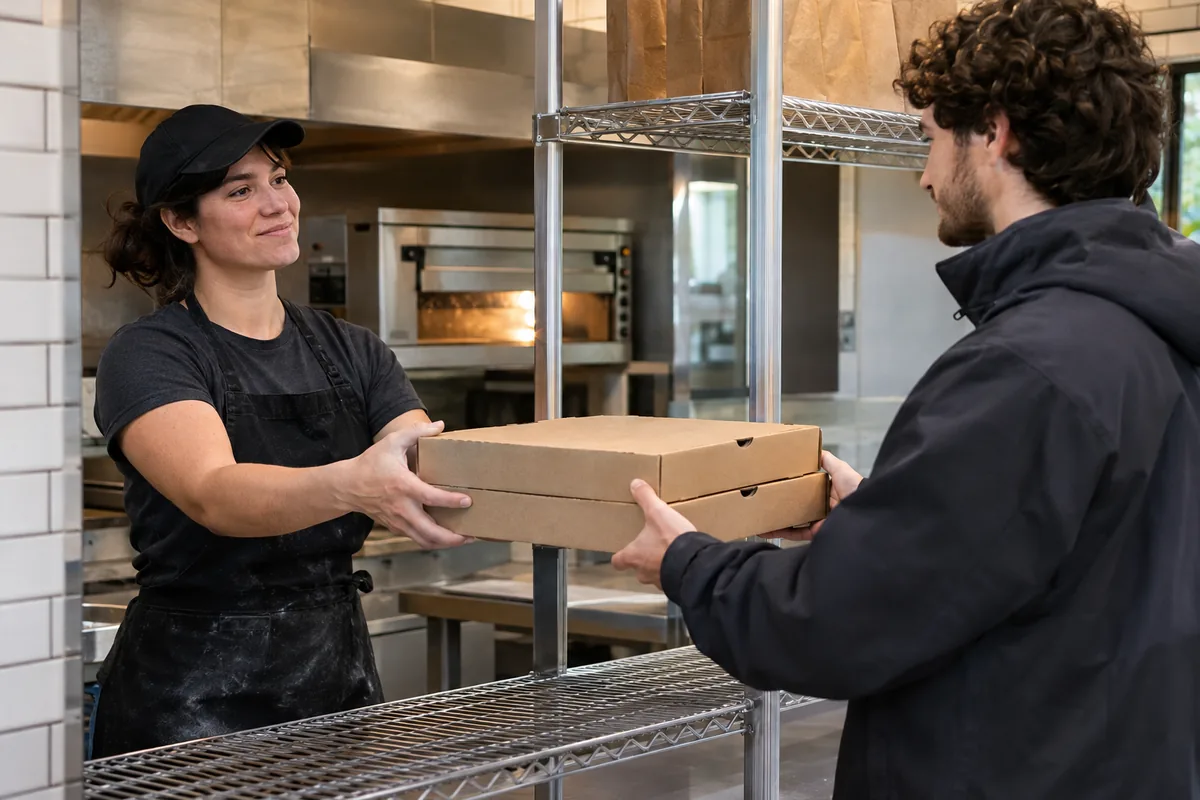
At collection, match the order reference with the person collecting it using the approved process. Avoid announcing unnecessary customer details across a public counter. The pickup handoff guide offers a related checklist for packaging and ownership. Test what happens when the wrong order is selected or a driver arrives before the food is ready, rather than demonstrating only an uncomplicated collection.
Does dispatch status mean live driver tracking?
Not necessarily. A recorded collection time, a driver assignment, and a live location feed are different capabilities. Ask the provider exactly which information is available, how it reaches the team, and what it costs to connect any separate service. Do not promise customers a moving map or precise arrival time unless that capability is actually supported, configured, and appropriate for your delivery arrangement.
Give staff a fallback answer when a status is missing or an external connection has not updated. Identify the person authorized to contact the delivery provider and resolve an exception. Keep customer-facing estimates qualified when they depend on information the shop cannot verify. The POS buyer's guide can help document integration responsibilities and support ownership before you rely on a dispatch function during service.
What should happen when something goes wrong?
A wrong address, missing item, or delivery dispute needs one coordinated response. Link the issue to the original order, record the agreed action, and tell the kitchen and cashier whether a replacement or payment adjustment has been authorized. Otherwise, different employees may arrange duplicate remakes or give conflicting answers. Preserve the original collection and correction information rather than replacing the record with a reassuring but unsupported status.
Rehearse a normal delivery, an early driver, an incomplete package, and a customer reporting a problem afterward. Check whether the team can establish the last confirmed event and the next responsible person. Review repeated exceptions to improve the handoff, not merely the screen labels. Use the contact page to request a demonstration of the dispatch information currently available for your proposed Freedom POS setup.